
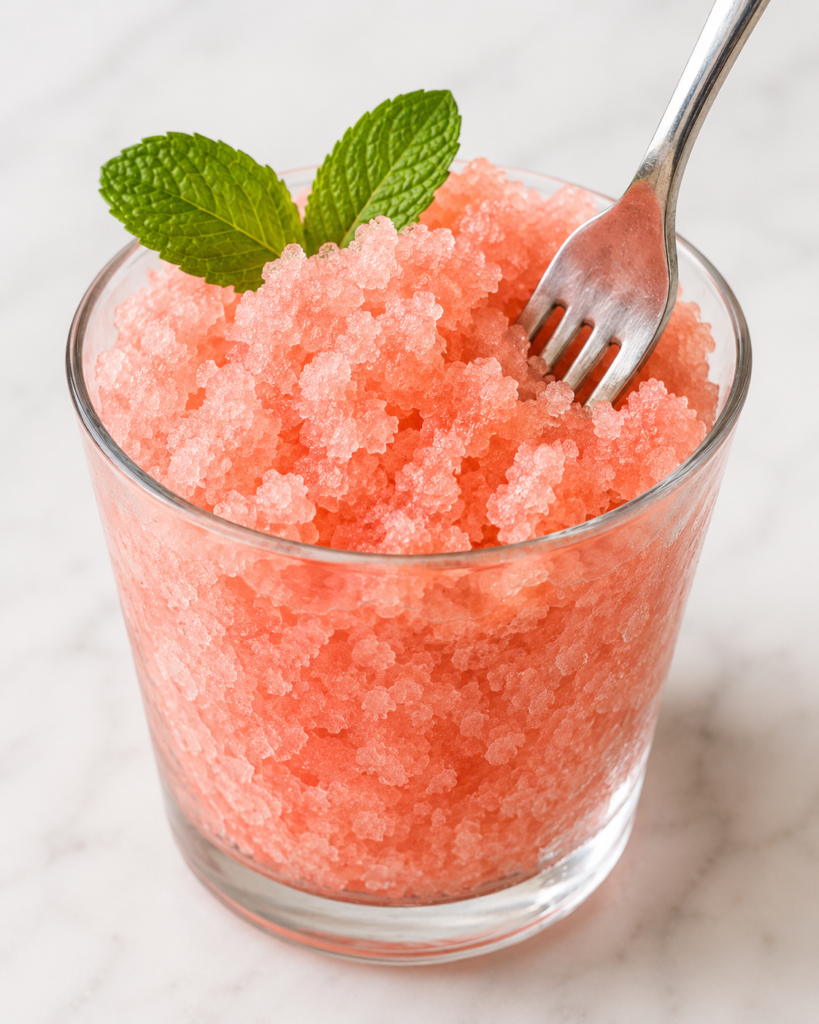
A Sicilian Classic Explained
If ever there was a time when you were curious about granita, here’s your answer. Granita is one of the oldest and simplest forms of frozen dessert in the world, having originated in Sicily. Unlike ice creams and gelatos, granitas are prepared through the simple method of freezing a sugared liquid. Generally, fruit juice or puree is used, and then the mixture is scraped repeatedly until it becomes loose, flaky ice. This manual method gives rise to varied outcomes every single time and is what makes granita all the more special. Although the recipe has been passed down through Italy, the Sicilians claim granita to be their very own dish.
Granita vs. Sorbet: What’s the Real Difference?
These two get confused all the time, but let’s clear up the confusion. The ingredients used for both of them are pretty much the same: sugar, water, and flavors. However, the textures of the desserts are different from each other. The first one is churned during the freezing process, resulting in small crystals and a creamy texture of the dessert. At the same time, the second one is frozen without churning. This leads to large crystals forming, which, when scraped with a fork, results in a snow-cone-like dessert.
The Equipment You Actually Need
One of the main reasons granita has remained relevant for centuries is that it does not require too much effort. You don’t have to buy an ice cream machine; you don’t have to deal with a compressor. There’s no special setup needed. The only things that you need are a shallow dish, a fork, and a freezer. It helps to use a blender if you are using whole fruit because the process is much easier.
How to Make Granita: The Freeze-and-Scrape Method
This process has not seen much change over the years because the method has worked just fine.
- To begin with, mix the sweetened liquid and then pour it into a pan with a shallow depth of roughly half an inch.
- It is important to note that shallow depths are crucial because deeper depths take more time to freeze evenly and tend to be very icy at the center and slushy towards the edges.
- Now, after putting it in the freezer, leave it for an hour, then start scraping using a fork, breaking the formed crystals and incorporating them into the liquid part.
- Repeat the process of putting it in the freezer and scraping until the whole mixture turns into flakes of crystals. This will roughly take three to four hours.
Flavors Worth Trying
Granita’s leniency allows just about any kind of liquid to be used as its base. The classic choice would be lemon, which has that refreshing and crisp sweetness. Close behind comes coffee, which is sometimes paired with whipped cream in Sicily. After this, many different flavors come into play – from mint to almond, from watermelon to wine. And if you’re trying to make some at home, use whichever fruit you have on hand and is in season – granita is at its best when its taste is already strong enough without sugar.
Beyond Dessert: Savory Granita Ideas
Even if most people are used to thinking of granita as some kind of dessert, it doesn’t have to end with that. Granita based on tomatoes, with some wine or herbs added for flavoring, is surprisingly good when served as a palate cleanser or even as a topping for chilled fish. It may be unusual, but when you get down to basics, making a savory dish from such a dish doesn’t seem like rocket science anymore.
Craving something a little heartier for the holidays? Check out our Green Bean Casserole Recipe for a classic, crowd-pleasing side dish that’s just as easy to make.
Pingback: How to Make a Hugo Spritz at Home (5-Minute Recipe) -