
For many years now, protein has been king of every wellness feed. But now, fiber is making a comeback. Go ahead and check out TikTok; you’ll find the term “fibermaxxing” cropping up in every video. People are loading their plates with as many beans, oats, and chia seeds as they possibly can. It’s all part of this glowing transformation of the gut. But just as with any other viral trend, there’s a catch. Do it wrong, and it’s guaranteed to make you bloated, gassy, and generally uncomfortable. Do it right, and it might actually do something good for you. This is where this guide comes in.
What Is Fibermaxxing?
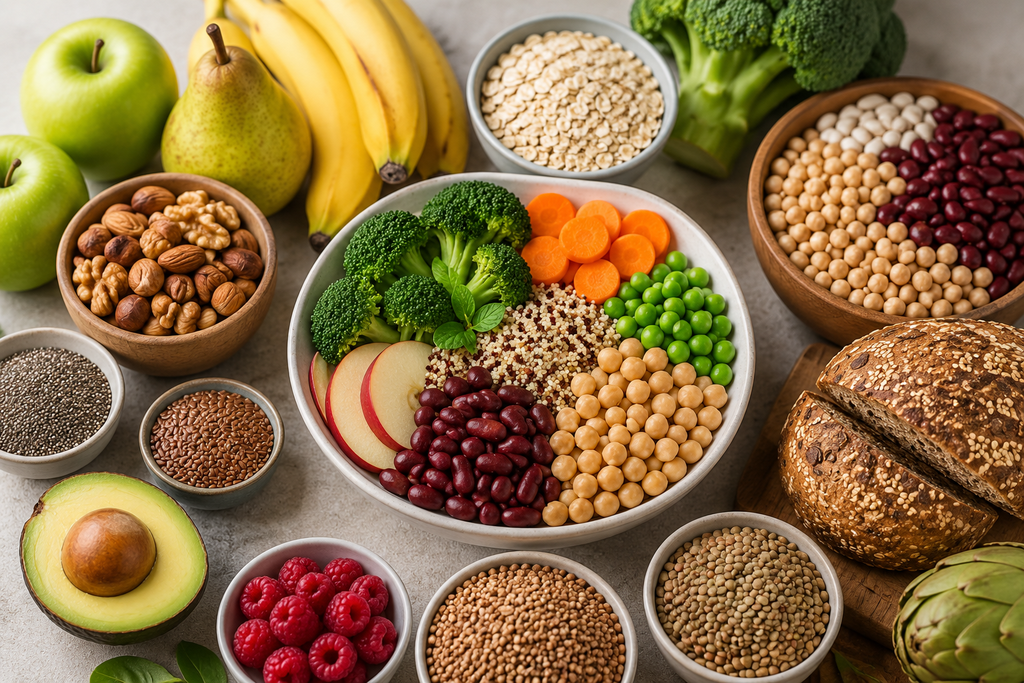
It is just the conscious inclusion of foods that are rich in fiber content in one’s diet. The foods include, but are not limited to, vegetables, beans, whole grains, fruits, nuts, and seeds. Rather than consciously counting the grams of fiber in foods, all individuals do is make sure they consume more fiber-rich foods when possible. For instance, in a smoothie there will be the addition of chia seeds, in salads there will be chickpeas, and in oats, there will be berries and flaxseed. The idea was not invented on social media; it only coined its name.
Why Is Fiber Suddenly Everywhere?
For many years, protein was the target nutrient. There wasn’t any advertising on protein-free labels, snacks, shakes, and other products. Inevitably, the spotlight had to turn to the forgotten nutrient. It could not be anything else but fiber. First of all, because the average person does not consume enough of it. It is no secret, as nutritionists emphasize many times. Secondly, because the scientific community continues to prove its connection with vital physiological processes. Fiber participates in the normal digestion process, as well as glucose and cholesterol metabolism. Long-term observations show a decreased risk of disease incidence among those who consume enough fiber. To conclude, the scientific evidence about fiber is already there.
Soluble vs. Insoluble Fiber: What’s the Difference?
Fibers also vary greatly in terms of their functions. Knowing the basics about the two main types will allow you to construct a better meal. The first one is soluble. It dissolves when coming into contact with liquid. As a result, the fibers turn into a sort of gel that slows down the process of digestion. What is more important, it is able to feed beneficial gut bacteria and even reduce the levels of cholesterol in your blood. The sources of this type of fiber include oats, apples, citrus fruits, beans, carrots, and psyllium husk.
The other type of fiber does not dissolve. It adds bulk to the stool and improves the digestion process. Thus, it may be considered helpful in case of constipation problems. Some of its sources are whole wheat foods, nuts, seeds, and vegetables such as cauliflower and green beans. As mentioned earlier, all whole plant foods contain a combination of both types. This is the main reason why variety plays a bigger role than any kind of ‘miracle’ food product.
Is Fibermaxxing Actually Healthy?
This is where nuance comes into play. It is genuinely wise advice for you to increase the amount of fiber you consume. Yet, “maxxing” means you should push your intake to the max. This attitude is usually what causes trouble. Indeed, registered dietitians generally agree that the very idea is great. However, they do warn many people about the extreme approach to it. Instead of pushing your body to the limits and trying to consume as much fiber as you possibly could, set realistic goals for yourself. The wisest decision is to make sure you consume enough fiber per day. Depending on the age and sex of the person, it usually amounts to 25-38 grams. Thus, the effect becomes insignificant beyond this number. Yet, digestion issues become more prominent. In conclusion, fibermaxxing is indeed healthy. Yet, it must be done properly.
Why Fiber Causes Bloating?
Have you ever had a fiber-filled feast? Did you feel bloated after your meal? That’s not something imaginary. Fiber is something your body cannot digest completely without help. In this case, the help comes from gut bacteria in your large intestine. Bacteria ferment fiber, creating gas in the process. If you increase your fiber intake suddenly, you will increase the gas production too. The consequence is bloating, cramps, or flatulence. It’s not dangerous, just your gut adapting to the bigger load. But still, that adaptation process is not very pleasant. Fortunately, it’s easy to avoid it.
How to Start Fibermaxxing Without the Bloat?
The key to fibermaxxing effectively is not about willpower but pacing. Following is what helps the most.
1. Increase Your Intake Gradually
Going from 15 grams to 35 grams within one night is not a smart choice. The microflora in the large intestine needs some time to adjust to the new conditions. Instead, it is better to increase the fiber intake by 3 to 5 grams at intervals of several days. This means one fruit or one portion of oats per day. In two or three weeks, one will be able to naturally increase the amount.
2. Drink Water While Fibermaxxing
Fiber consumes water along the entire path of passing through the gastrointestinal tract. If there is not enough fluid consumed, then the process can lead to worsening constipation. It is necessary to consume at least eight glasses of water per day while increasing fiber intake. Moreover, it is good to cut down on fizzy drinks because they add more gas.
3. Spread Fibermaxxing Across the Day
Eating all your fiber in one sitting is also a very common mistake. Rather, distribute the fiber intake throughout your day in terms of breakfast, lunch, dinner, and even snacks. It will help if you consume flaxseeds in the morning and beans at lunchtime, and end the day by eating vegetables with your dinner. This approach helps keep the burden low during any particular meal.
4. Start With Gentler Fiber Sources
Not all fiber-filled foods are equally tolerable. Oats, chia seeds, oranges, and cooked vegetables are some foods that ferment more slowly and hence produce smaller amounts of gas. Raw cruciferous vegetables and large amounts of beans can be quite difficult for the body to digest initially, although this issue resolves itself once your body becomes accustomed to the increased fiber intake.
5. Don’t Forget the Rest of Your Plate
While fiber is important, it should not be forgotten that it is not the only thing that your body requires for nutrition. In addition to protein and healthy fats, vitamins are important too. So, make sure that your fiber-rich meals consist of lean proteins and healthy fats.
Easy High-Fiber Foods to Start With
When you do not know how to get started, begin with food items that are soft and familiar to you. Rolled oats are a good start as a breakfast food item. Chia seeds and flax seeds can be used as additions to smoothies or yoghurt. Berries provide fiber along with their natural sweetness. Carrots and zucchini are gentle choices in vegetables. Lentils, when well-rinsed, are a good source of fiber as well. Wholegrain bread can replace white bread. Small amounts of these food items will quickly add up.
A Sample Low-Bloat, High-Fiber Day
The following shows how an ideal day with fibermaxxing could play out:
- Breakfast: Oatmeal mixed with berries and some chia seeds
- Snack: An apple with a few nuts
- Lunch: Quinoa and roasted vegetables plus chickpeas
- Snack: Carrots with hummus
- Dinner: Salmon with broccoli and brown rice
This way, the fiber consumption will be well spread throughout the day and will contain both types of fiber. Hence, your digestive tract will not be flooded with fiber at once.
Common Mistakes to Avoid
Some behaviors may cause new fiber maxers to fail. For starters, increasing consumption of fiber in just one night will lead to bloating. Secondly, lack of hydration may worsen the symptoms. Thirdly, taking supplements alone means that you miss out on vital nutrients found in whole foods. Lastly, not listening to your body can lead to agony from discomfort.
The Bottom Line
Fibermaxxing is not simply another wellness gimmick that offers little beyond an empty marketing ploy. Rather, Fibermaxxing is rooted in a legitimate deficiency in most adults’ diets. While the notion of increasing the amount of fiber in one’s diet through whole foods makes sense, the “maxxing” element to the diet can have negative repercussions if it is done too quickly. Rather than going for the extreme, a slower and more consistent approach will yield more favorable results.
If you’re looking for full recipes, like green beans or granita, check out our recipe section for step-by-step ideas.